Understanding the Vagus Nerve’s Role in Stress Management
By Chandra Beal
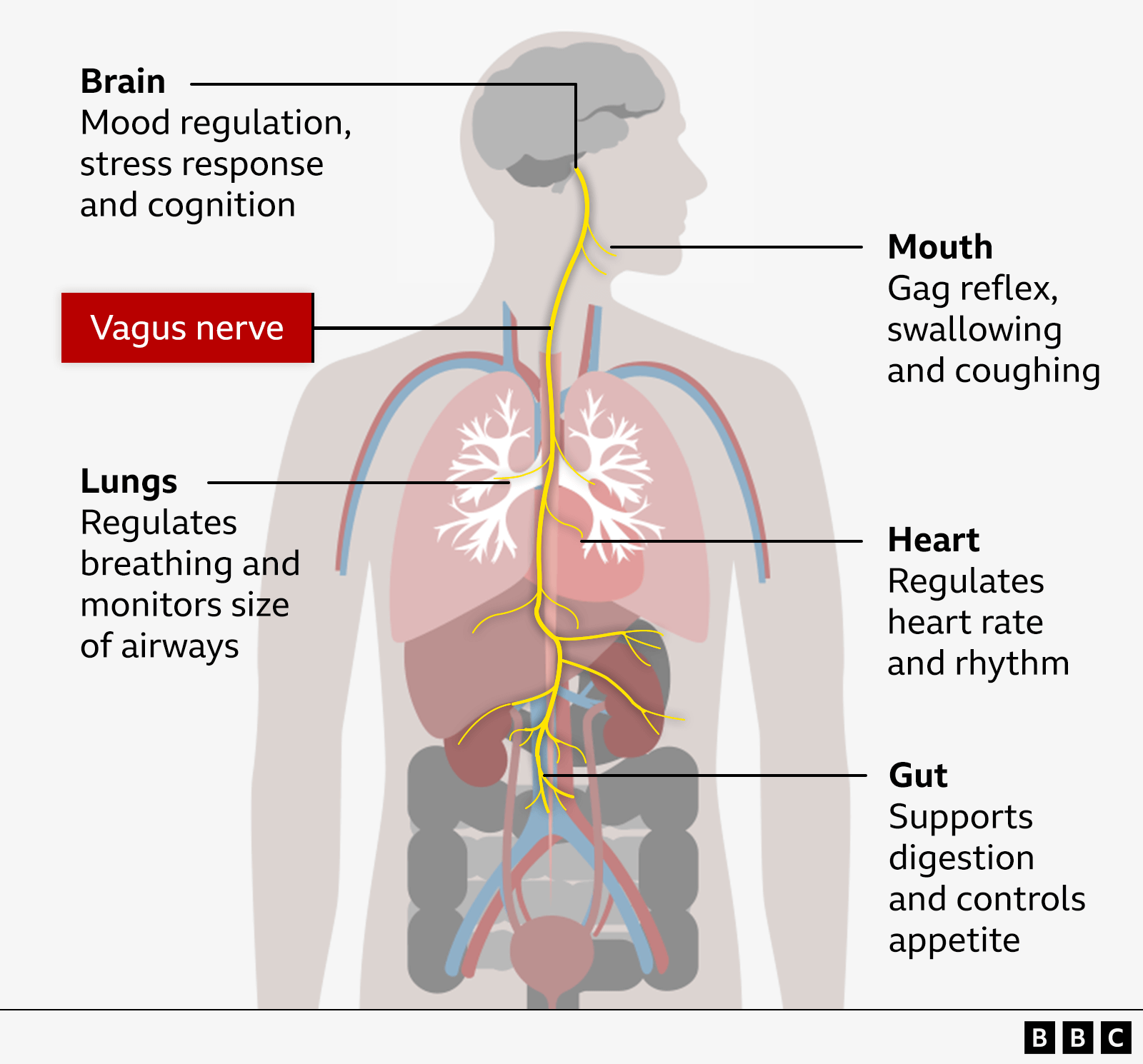
The vagus nerve is one of the most important components of our autonomic nervous system, yet is often overlooked when addressing stress. “Vagus” comes from Latin meaning "wandering". This nerve branches out from the brainstem and extends down through the neck, heart, and abdomen. It plays a critical role in various bodily functions, including heart rate, digestion, and respiratory rate. But its significance goes beyond physiological processes; it also profoundly influences our emotional and psychological states.
The Vagus Nerve: An Overview
The vagus nerve is the longest cranial nerve and transmits information between the brain and the body. It regulates involuntary functions like digestion, heart rate, and breathing, and it contributes to the body’s ability to maintain homeostasis. Along with the sympathetic nervous system (which prepares the body for “fight or flight” responses), the vagus nerve is a crucial part of the parasympathetic nervous system, often referred to as the “rest and digest” system.
When functioning optimally, the vagus nerve helps the body to relax. But, many factors such as stress, anxiety, and trauma can disrupt its function, leading to a heightened state of arousal and distress.
Polyvagal Theory: Understanding the Connection between Nerves and Emotions
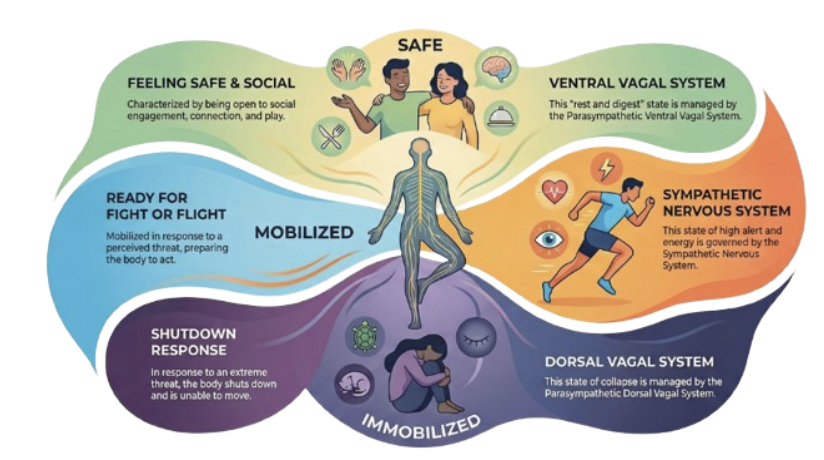
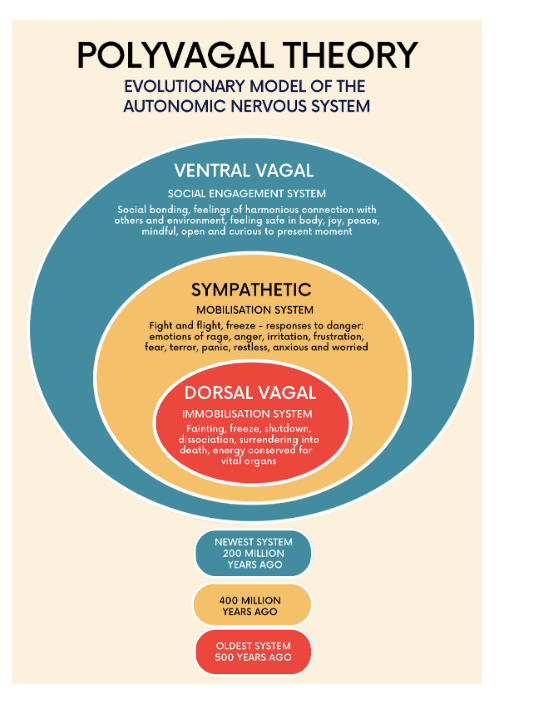
Developed by Dr. Stephen Porges in the 1990s, Polyvagal Theory expands our understanding of the vagus nerve's role in emotional regulation and social connection. According to this theory, the vagus nerve is not merely a conduit for physiological functions but is deeply intertwined with our emotional and psychological experiences. Polyvagal Theory divides the autonomic nervous system into three main pathways:
The Ventral Vagal Complex (VVC): Responsible for feelings of safety and social engagement. When activated, it promotes calmness and connection, supporting social behaviors and communication.
The Sympathetic Nervous System (SNS): This pathway activates the "fight or flight" response, preparing the body to respond to perceived threats. While essential for survival, prolonged activation can lead to chronic stress and anxiety.
The Dorsal Vagal Complex (DVC): When an individual is overwhelmed or perceives extreme danger, this system can lead to immobilization or dissociation. This is often seen in cases of trauma, where the body may shut down or escape mentally.
Understanding how these systems interact allows us to recognize the body's responses to stress and trauma, providing a framework for exploring therapeutic interventions to restore balance and wellbeing.
Somatic Exercises: Bridging Mind and Body
Somatic exercises are physical practices that emphasize awareness of bodily sensations, promoting a mind-body connection crucial for stress management. By focusing on the body's internal experiences, these exercises help individuals regulate their nervous systems, primarily through the vagus nerve. The journey to well-being begins with awareness and accessible practices that honor the profound connection between mind and body. These types of practices help to uncouple the physical response from the nervous system’s reaction.
How Breath and Somatics Connect to Stress Management
Integrating somatic exercises and breathing techniques into daily routines can help manage stress associated with vagal nerve dysregulation. By fostering a greater awareness of bodily sensations and employing controlled breathing, anyone can effectively activate the vagus nerve and promote a sense of calm and safety.
Examples of Somatic Exercises:
Body Scan Meditation: This involves mentally scanning the body for tension or discomfort, encouraging relaxation and awareness of physical sensations. Click here to listen to a guided body scan.
Humming: It may sound surprising, but humming isn’t just a pleasant sound—it’s a powerful tool that can help you manage stress, regulate your emotions, and enhance your overall well-being. Backed by recent research, the practice known as Bhramari Pranayama has been shown to reduce stress and improve heart health significantly. Click here to see a demonstration.
Self Massage on Face, Head, and Neck: The face and head muscles “talk” to the vagus nerve, so we can stimulate the vagus by massaging the head, neck, and especially around the eye sockets. Click here to see how to massage the face.
All these types of exercises activate the ventral vagal pathway, fostering a sense of safety and connection within oneself and with others.
Breathing Techniques: Harnessing the Power of the Breath
Breathing exercises can significantly influence the vagus nerve and, in turn, emotional and physical wellbeing. Controlled breathing helps stimulate the vagus nerve, activating the parasympathetic nervous system, promoting relaxation, and reducing stress responses.
Diaphragmatic Breathing: Also known as abdominal or belly breathing, this technique encourages deep, slow breath, activating the diaphragm, and promoting relaxation. Start by placing a hand on the stomach, just beneath the rib cage. Inhale, slowly breathing in through the nose, drawing the breath down toward the stomach. As you breathe in, the stomach should push outward against the hand, while the chest and shoulders remain still. A helpful visual is to imagine your stomach inflating like a balloon while you’re inhaling, and deflating while you exhale. Repeat this process for a few breaths.
A physiological sigh is a breathing technique that acts as a reset button for our respiratory and nervous systems. Physiological sighs help counteract shallow breathing caused by stress by promoting deeper, more relaxed breathing. To start, you’ll take one inhale through the nose, followed immediately by a second inhale through your nose reaching a full breath. Then you’ll start to release all the air in your lungs through a long, slow exhale through your mouth. Repeat this process for a few breaths.
4-7-8 Breathing: Inhale through the nose for 4 seconds, hold the breath for 7 seconds, and exhale slowly through the mouth for 8 seconds. This simple technique can promote calmness and reduce anxiety.
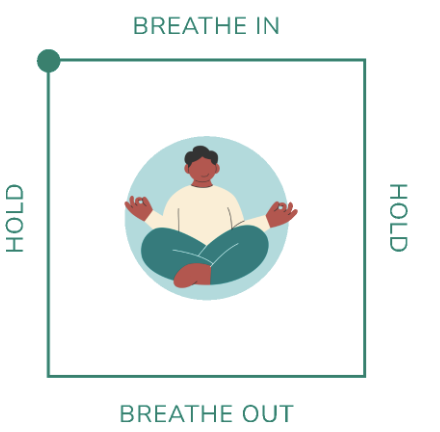
Box Breathing: Box breathing is a deep breathing technique that can help the body leave a state of stress and enter into a state of calm. Slowly count to four in your head as you take a deep breath in through your nose, hold that deep breath for 4 seconds. You’ll then exhale through your mouth for 4 seconds, and then hold for 4 seconds. Repeat this process for a few breaths.
Understanding the vagus nerve and its role in regulating emotional and physical health is paramount for individuals seeking to manage stress and trauma effectively. By incorporating principles from Polyvagal Theory and engaging in somatic exercises and focused breathing practices, we can reclaim the body’s natural balance and improve emotional resilience.
You can maintain healthy vagal tone through pranayama (breathing exercises). The “Ha Breath” is a great choice to practice: Watch the Ha Breath here.
Images from
https://integraleyemovementtherapy.com/
https://www.aldebaranhealing.co.nz/
https://www.bbc.com/news/articles/cy0k9yz5wexo